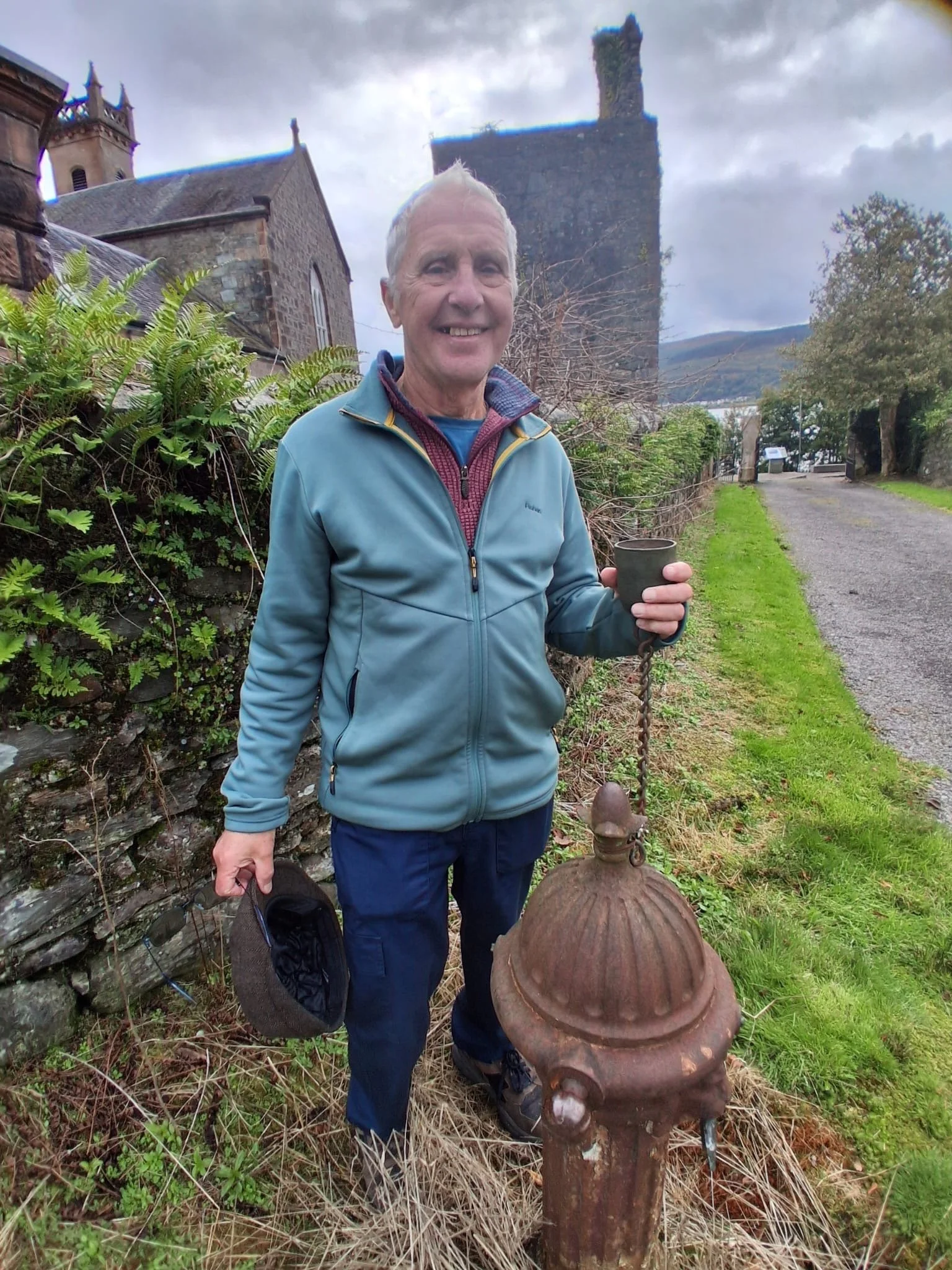
VISIT to KILMUN, THE HOLY LOCH, 3rd October, 2026:
FROM ONE PENINSULA TO ANOTHER!
Article & Photos by: Mavis Rodgers
(Our Community Heritage Group)
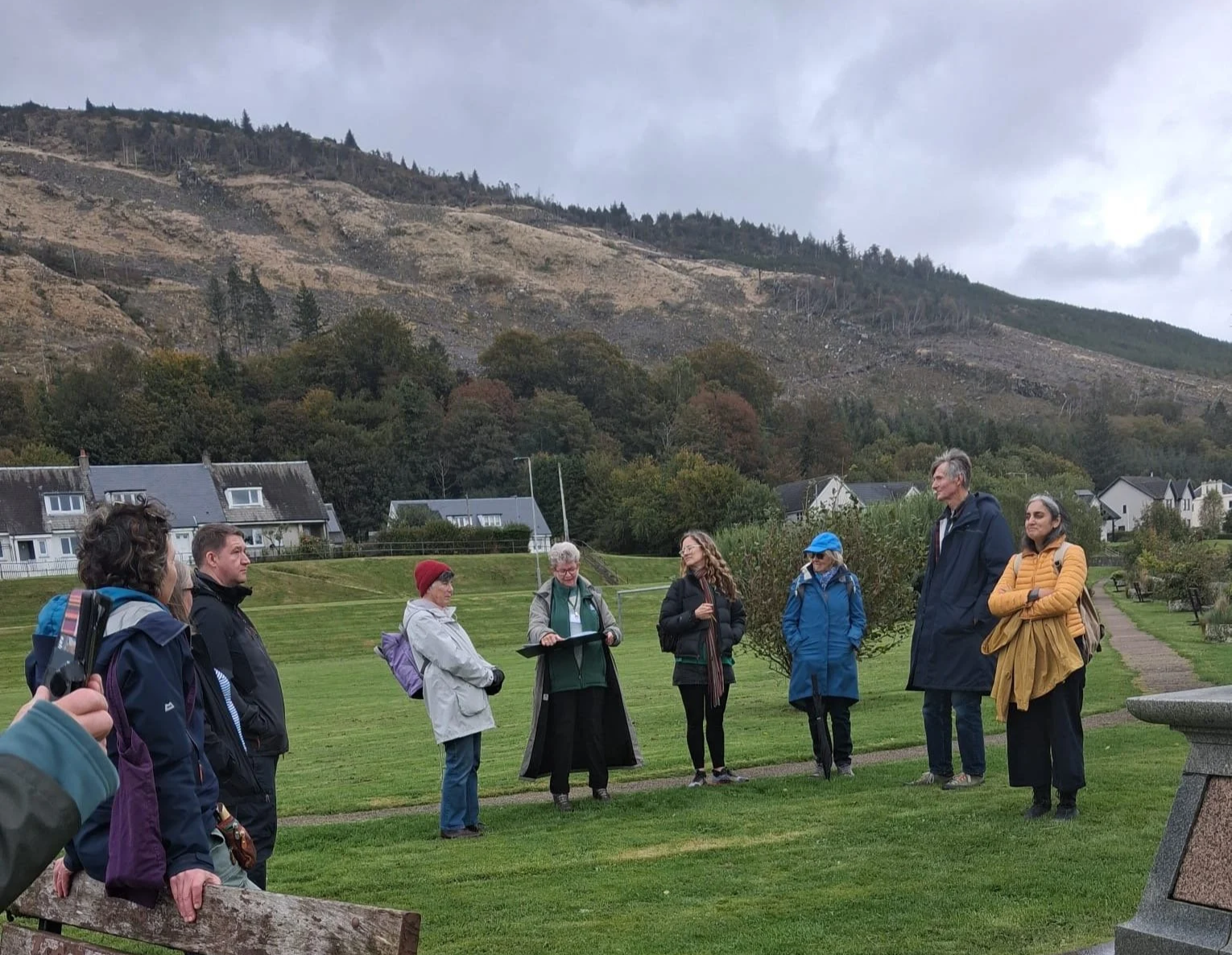
Source: Mavis Rodgers (Our Community Heritage Group)
Five of us left the Kilcreggan peninsula by car, to be joined in Kilmun by Richard and Frances Reeve, our aim being to visit Kilmun Church and Mausoleum, as well as walking to a Memorial through the village.
It could have been a short trip of 4 nautical miles by boat! Going by car, we travelled a distance of about 50 miles. (Importantly, the weather was kind to us most of the day, apart from a fairly, short shower later.)
But it was well worth the drive! The scenic, overland driving route being surely among Scotland's best.
Arriving at the Kilmun Parish Church, we were met by a very, able, lady guide. The current church is 185 years old, but it has a longer history as a place of Christian worship dating back over 1,300 years. An Irish monk named St. Munn (Fintan Munnu) founded a monastic community on this site. A carved, stone cross is from the 7th or 8th century. (How many of us have vaguely wondered at the name 'Holy Loch', but not taken the time to look into its background?)
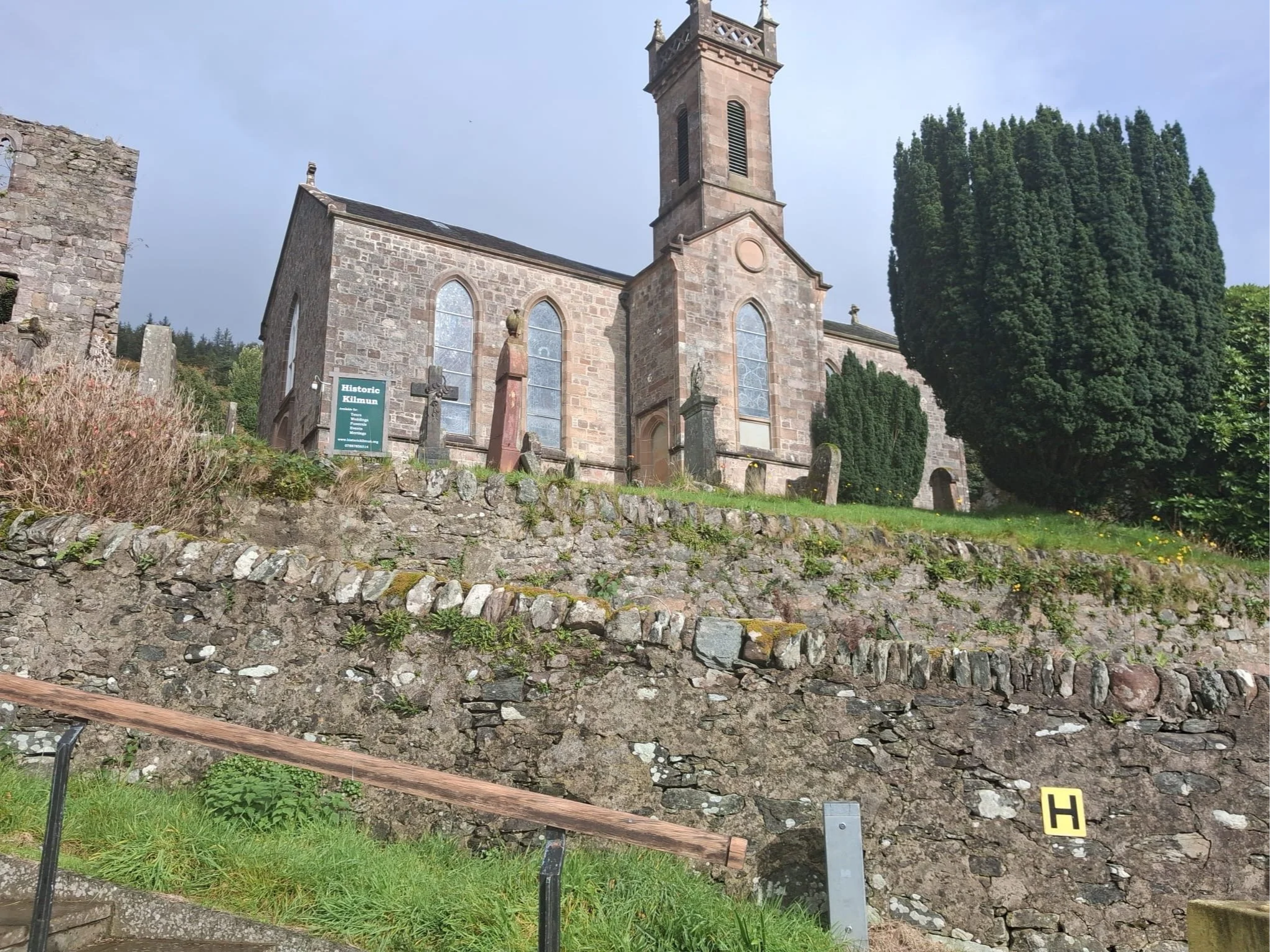
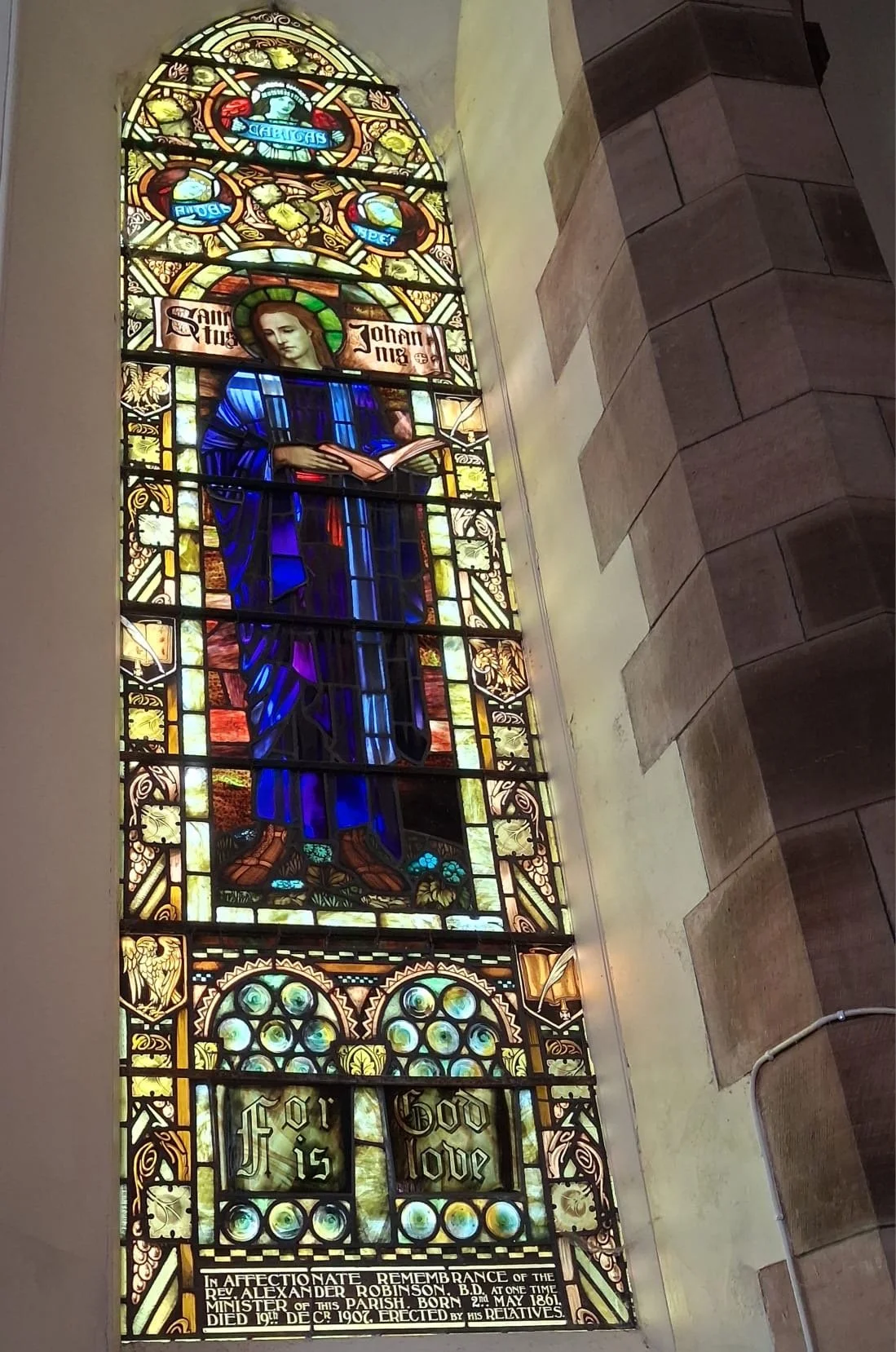
The Kilmun Church is now run primarily as a heritage and visitor site. Strone and Dunoon are the nearest places for Christians to meet now. There is a comprehensive souvenir booklet from Historic Kilmun titled “Kilmun Church and Argyll Museum”, plus other souvenirs.
Kilmun is only a tiny place but with a remarkable history. It played an important role in the spread of Christianity in the West Coast of Scotland, all because of one Irish man - Saint Munn (born around mid 6th century-635).
Who was this man? Before St Columba died, he had prophesied that St Munn should not be a monk but an Abbot.
St Munn must have had a very strong faith in the risen Lord Jesus to have been so devoted to Him. He was an ascetic and single minded, very disciplined and prayerful, and known as the most austere of the Celtic Saints. But, he achieved a great deal. Not only did he establish the monastic community in Kilmun, but, upon his return to Ireland, he founded a major monastery. A trailblazer - and someone you didn't mess with!
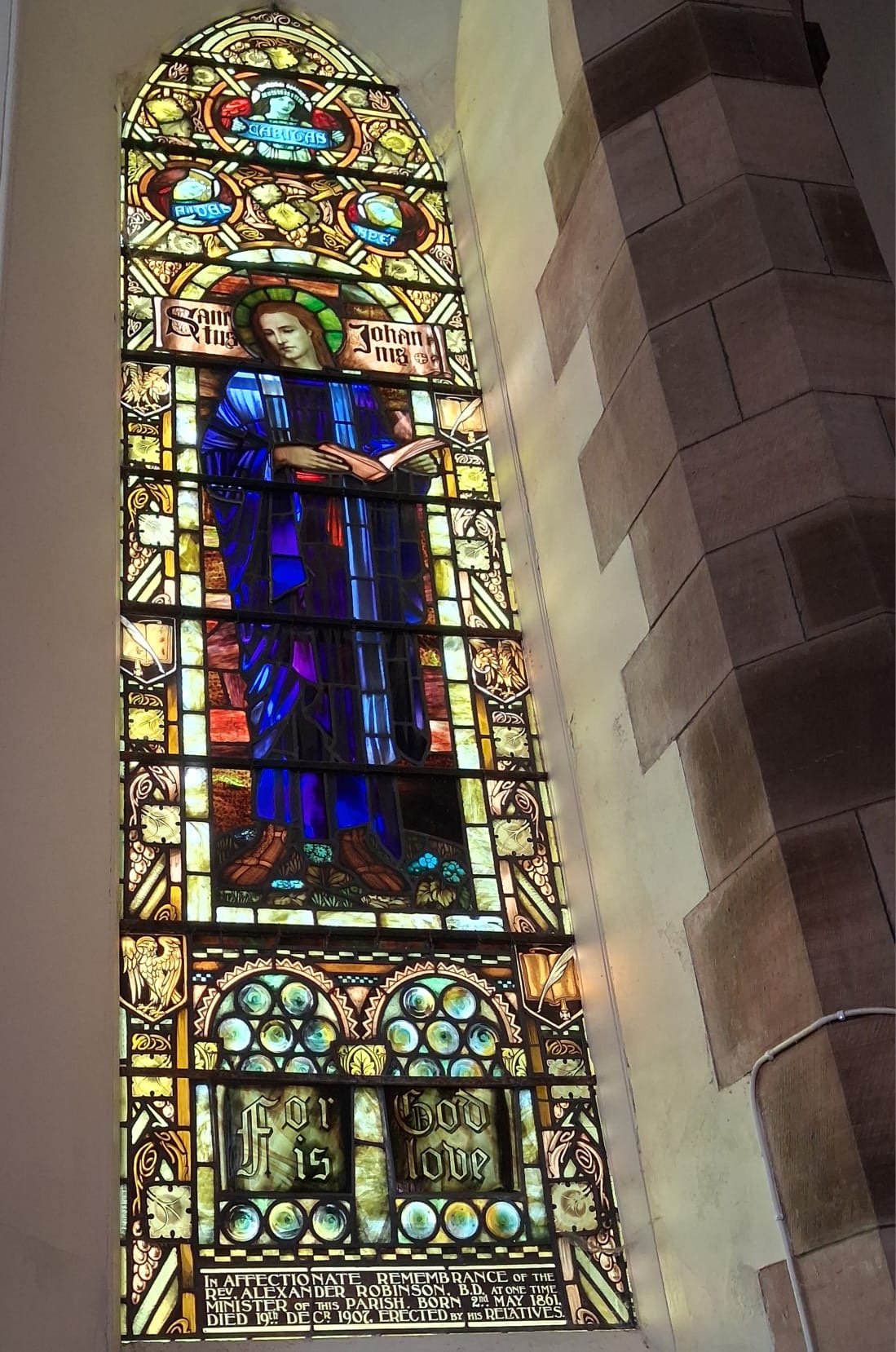
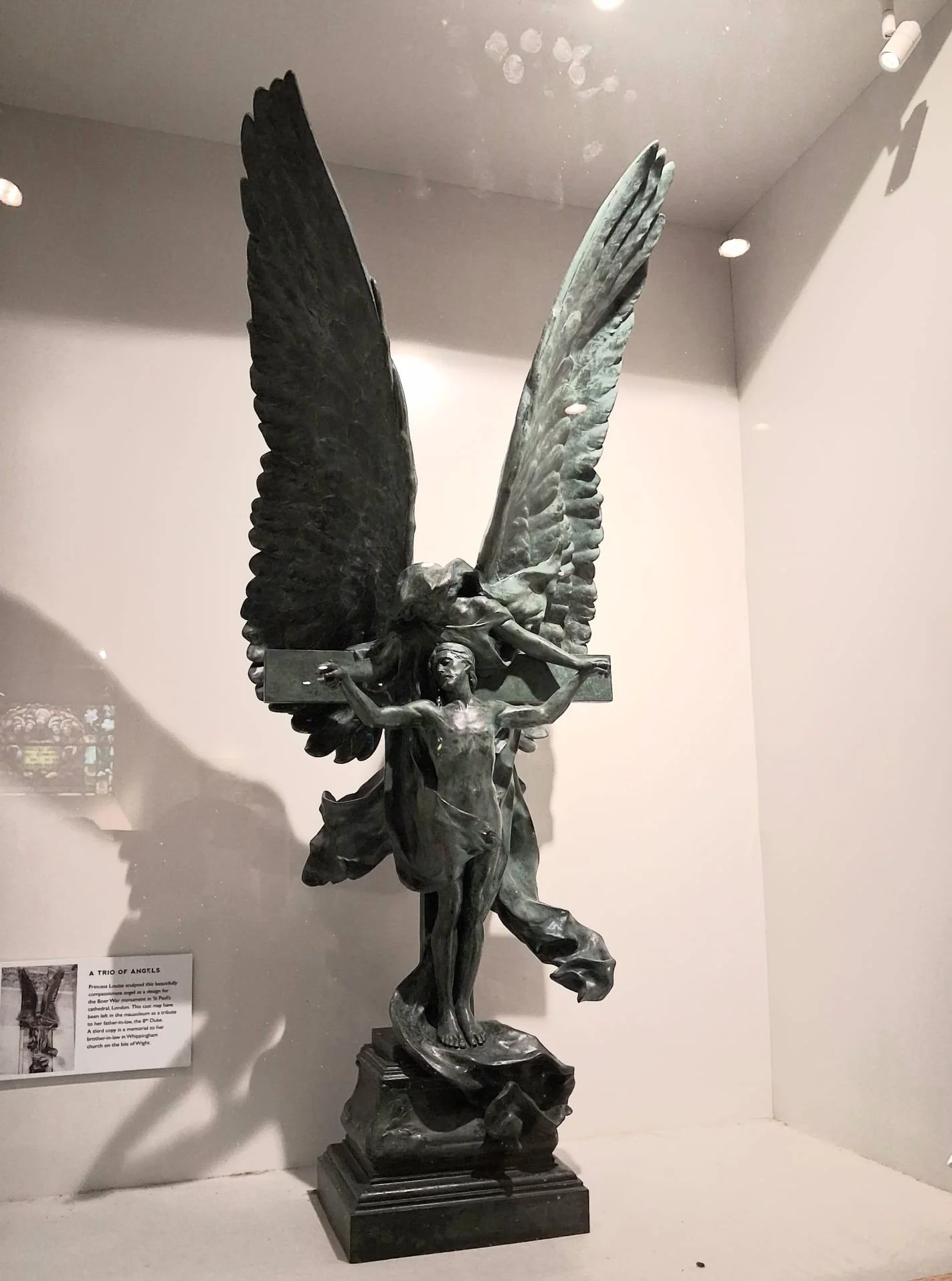
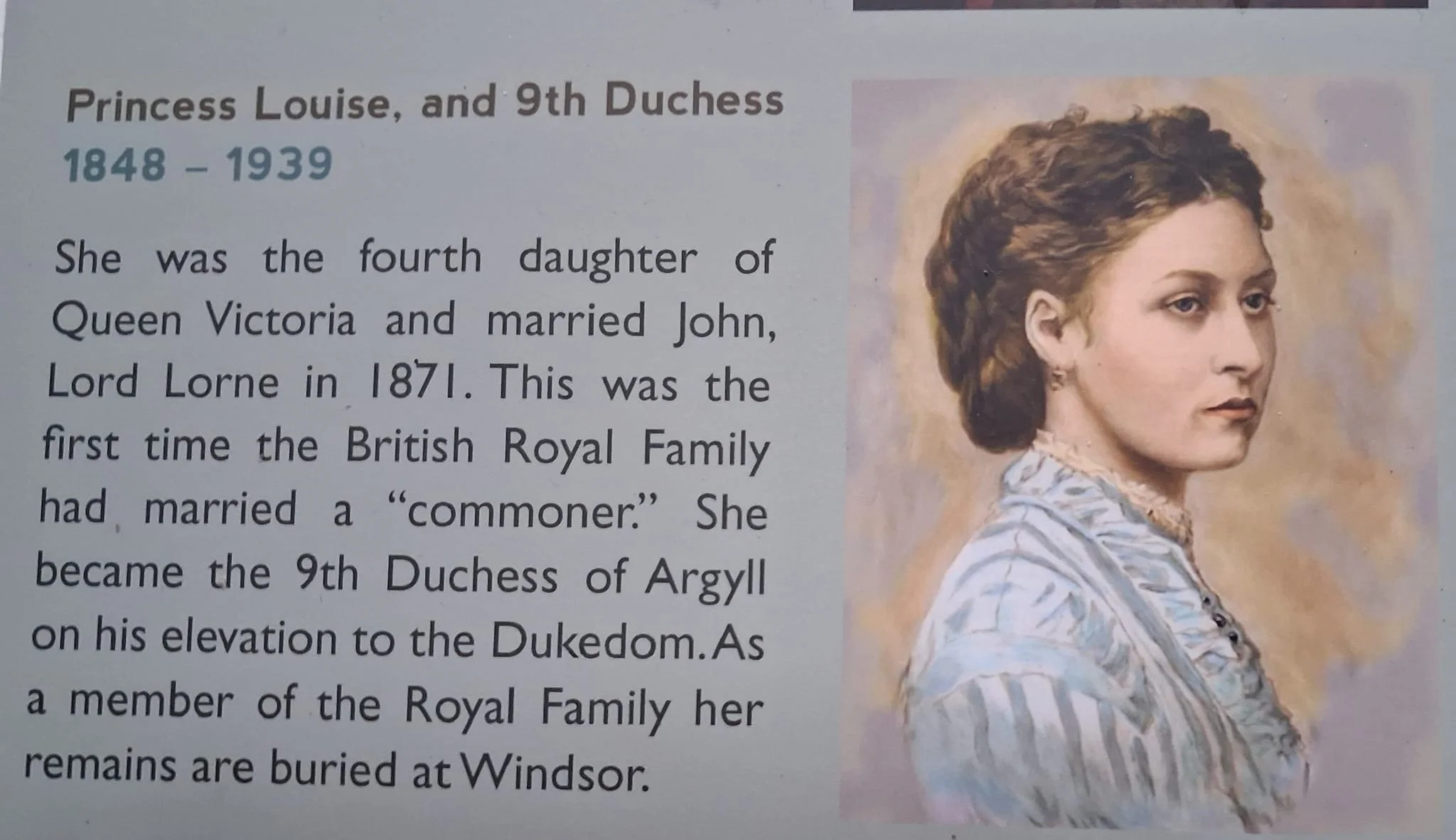
Notable features of the church: Several, wonderful windows by renowned, stained glass artist Stephen Adam (1848 – 1910). A most beautiful sculpture of an angel by Princess Louise ~ 4th daughter of Queen Victoria. In 1909, the Younger family paid for an organ ~ powered by an hydraulic pump.
There has been electricity since 1933, but it is still in use, and we had the privilege of hearing it being played really well. It is one of only two working water-powered church organs left in Scotland. Interestingly, to the left of the main door, another door was opened and we were allowed to view the inner workings of the hydraulic system as the organ was being played.
MAUSOLEUM:
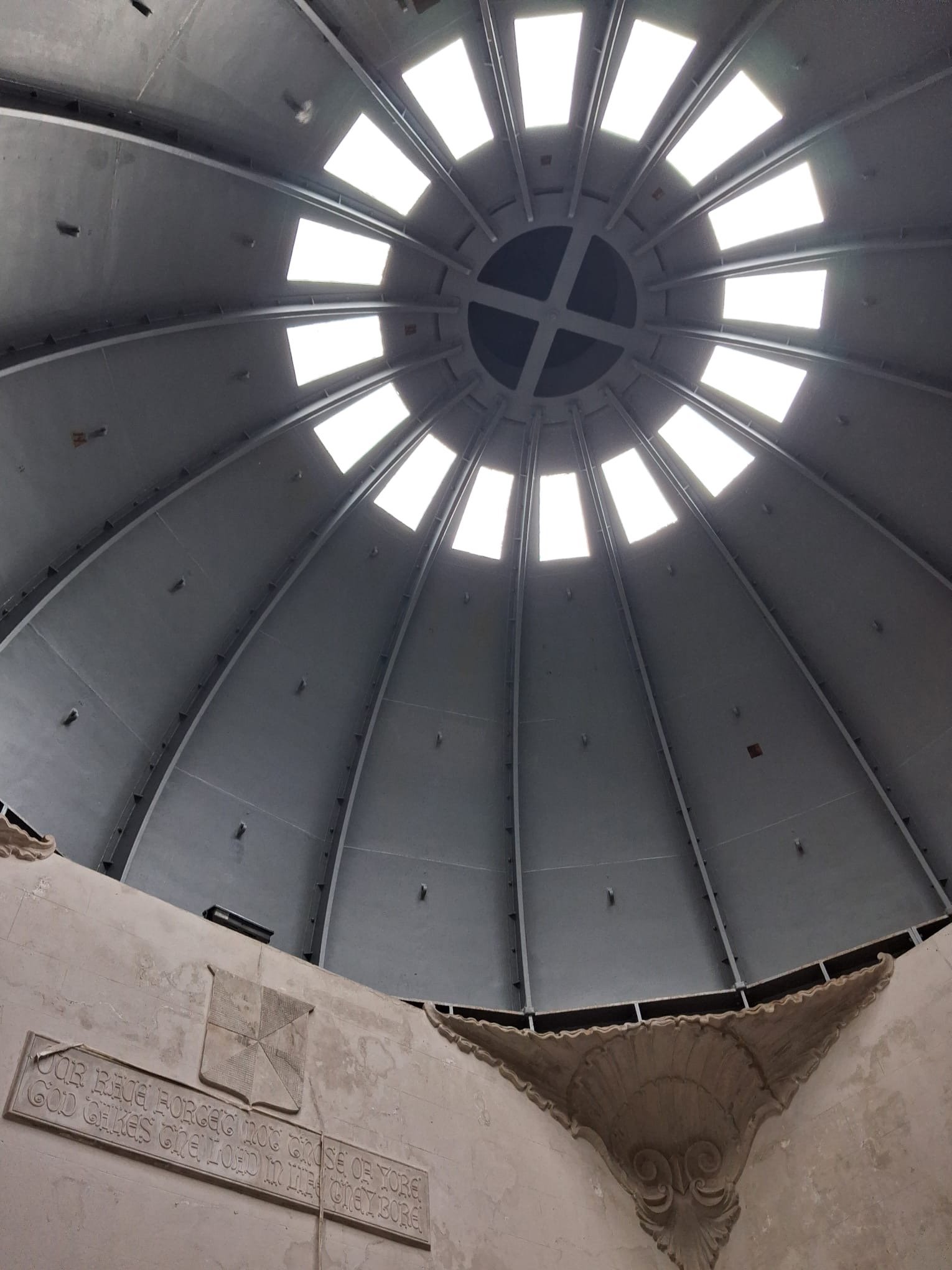
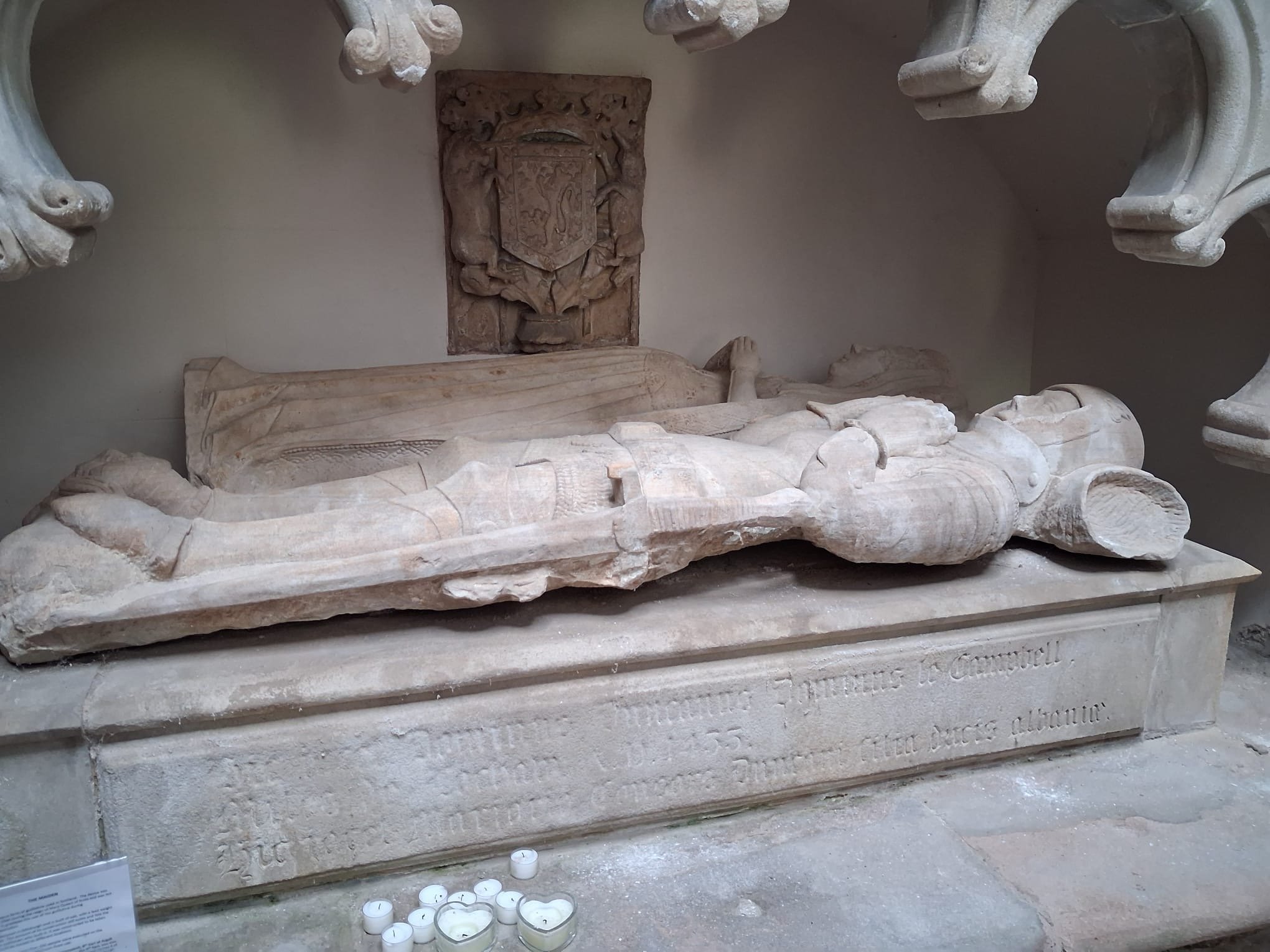
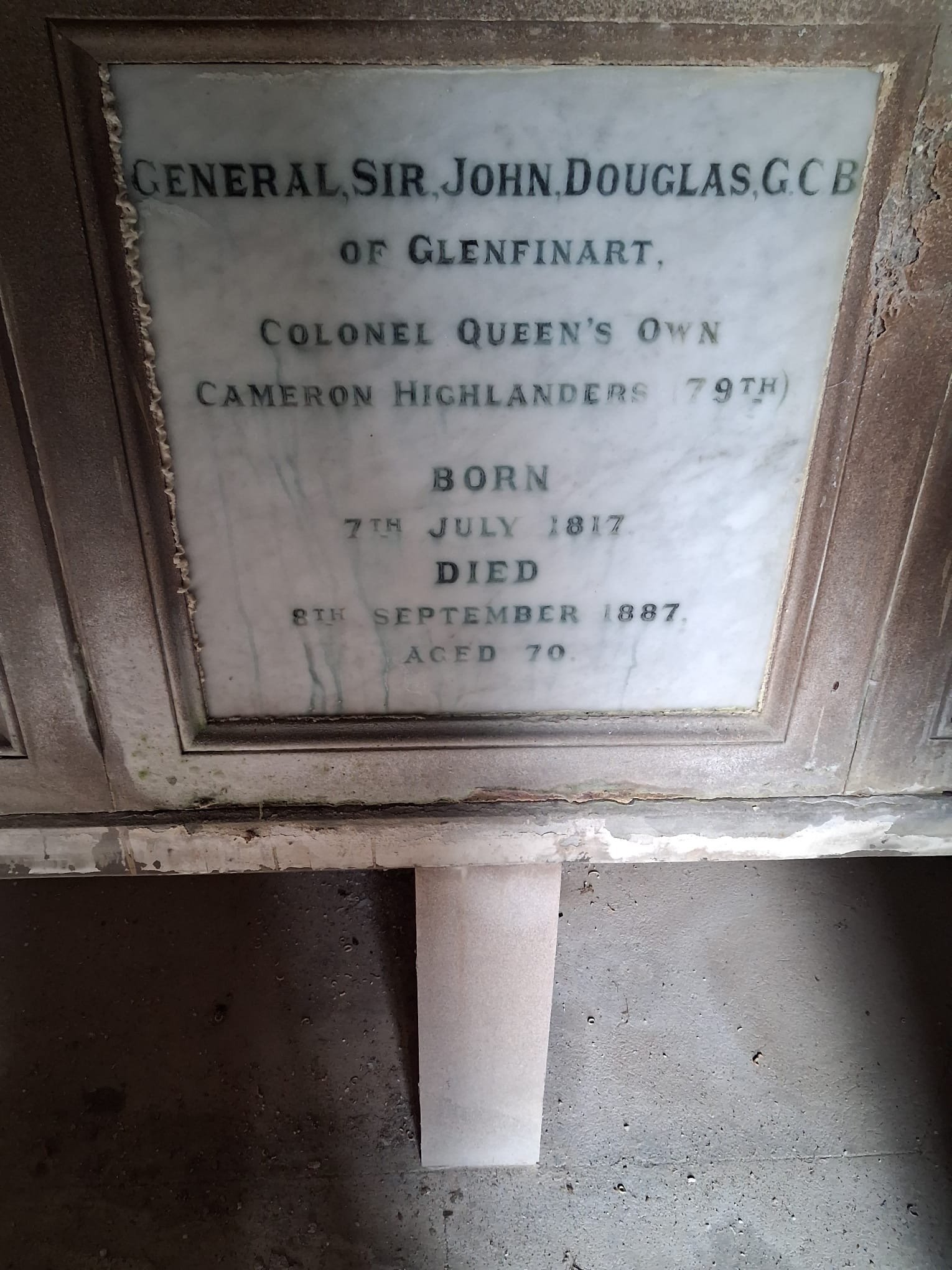
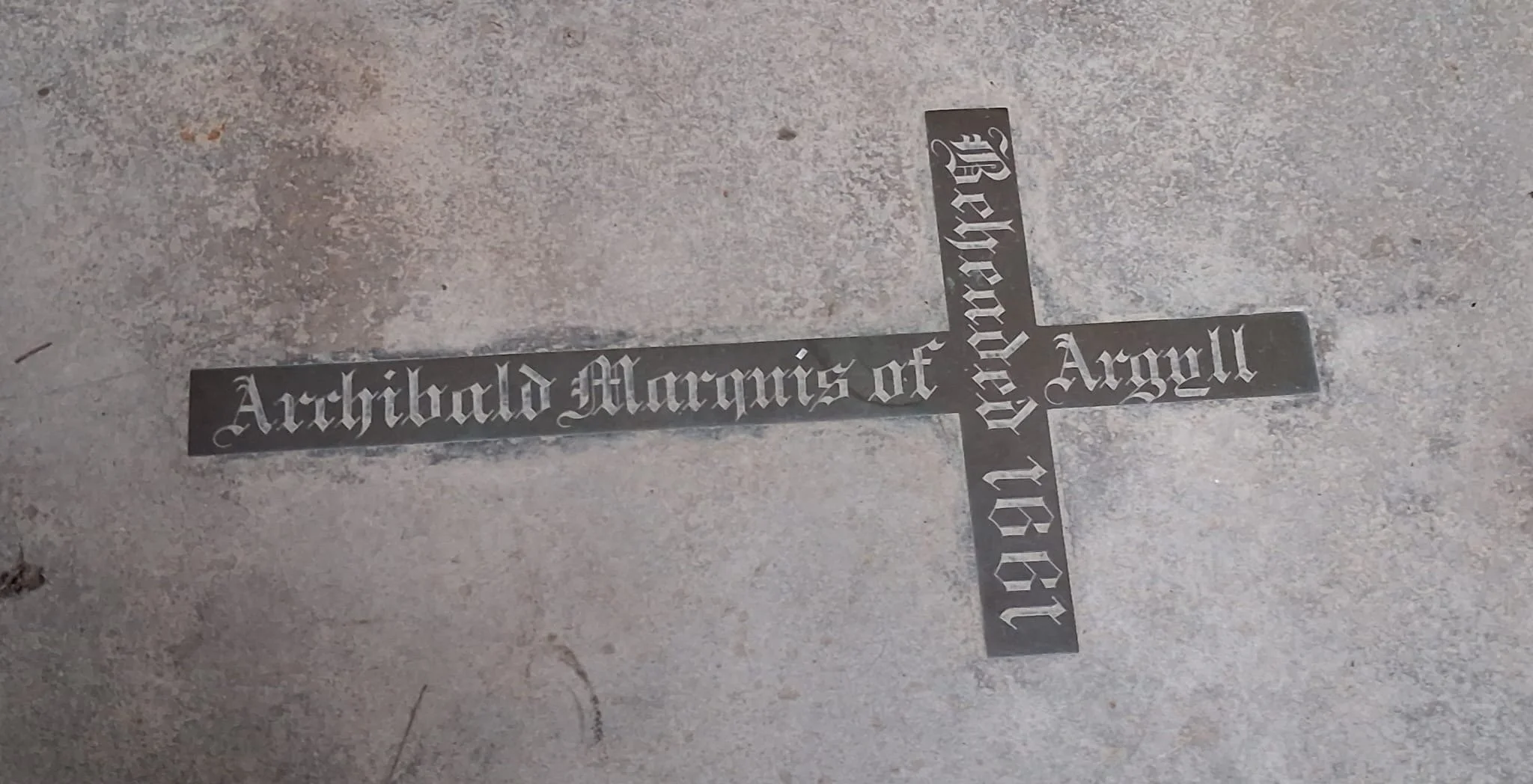
In the church's adjoining building is the Mausoleum with its unique domed cast iron roof, which lets in more light than the previous roof. For centuries, the Campbell clan governed the West Coast of Scotland, and nearly all Clan Chiefs wanted Kilmun to be their last, resting place. It houses stone effigies, vaults, and memorials to the Campbell family. Tragic Marquis Archibald Campbell (1607 - 1661) is there, where a cross is imbedded in the floor. He supported the Scottish Covenanters, and so was executed. Before the axe fell, he stated:
'I had the honour to set the King's crown on his head,
and now he hastens me to a better crown than his own.'
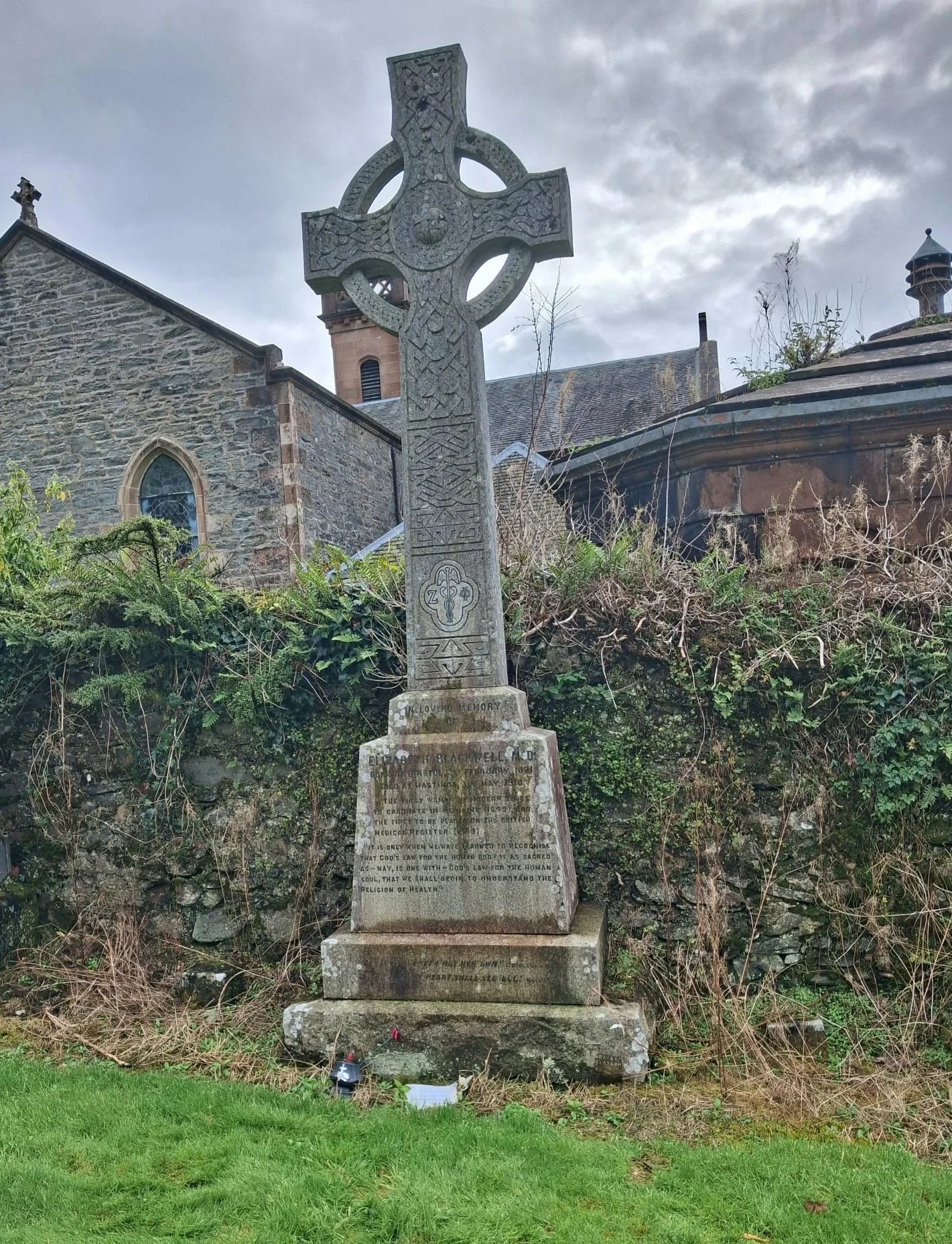
The church has a graveyard, and one notable grave is that of Elizabeth Blackwell (1821 – 1910).This notable woman was an English/American physician, notable as the first woman to earn a medical degree in the United States, and the first woman on the Medical Register of the UK.
We also walked along the Shore Road to a War Memorial, passing en route, the famous row of 6 listed, identical 19th century cottages, called the 'Napier Tea Caddies'. They resembled the classic, rectangular boxes or canisters used to store tea during the Georgian and Victorian eras.
'Now, would you like a cup of tea?'
At Graham's Point War Memorial, in its public green space, and with great views over the Holy Loch, our guide gave us more details about Kilmun. After which, we then walked back to the church and took our scenic route home.
A good and interesting day was had by all!
P.S. And, as it so happened, I had a lovely outing on what would have been a Wedding Anniversary!