Care and Conservation
On this page, you will find the work on heritage that village residents have been engaged in on a voluntary basis through the years.
Highland Boundary Fault Art Commission
The Highland Boundary Fault Stile was part of an art commission supported by the Heritage and Arts Groups of the Our Community project through a share of the Lottery Community Fund, awarded in 2024. It was led by Cat Auburn, and supported by Cove Park. A community Geology Walk led by geologist Bill Henderson, and a Children’s Art Workshop at Cove Park, developed by commissioned artist Maya Rose Edwards, helped shape the project.
The HBF Stile was officially opened to the public in December 2025.
Launch celebration of Highland Boundary Fault Stile (2025)
Artist Maya Rose Edwards in conversation with project lead Cat Auburn on the vision and process of the HBF stile art commission, Kilcreggan, December 2025
For information on the Highland Boundary Fault Stile sculpture, click here
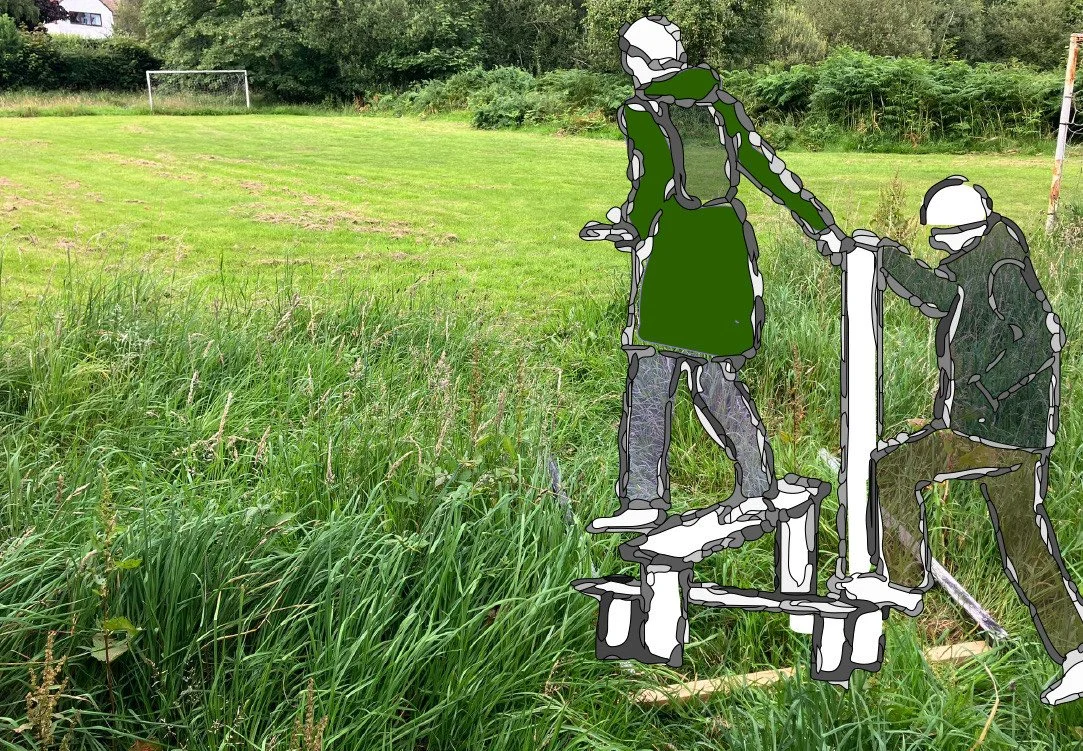
Artist’s sketch of the HBF Stile (Image credit: Maya Rose Edwards)
Victorian Drinking Fountain
Re-establish the drinking fountain in the area of Kilcreggan Pier
This was one of four drinking fountains placed at scenic locations within the Burgh of Cove and Kilcreggan in 1883 to provide drinking water for day trippers. Three fountains have been “lost” over time. The remaining survivor was removed from Shore Road in 2005 as a result of installation of a new sewage system. Since then, it has been kept in safe custody.
Since July 2025, the Heritage Group has been working towards re-establishing the drinking fountain as a bottle top-up station in the public domain in the vicinity of Kilcreggan Pier. However, the fountain needs renovation and the internal workings upgraded to meet modern hygiene standards. Water supply and drainage issues also need to be addressed.
Along with heritage, this project links with other Our Community groups’ activities, such as the Environmental Group and Clearwater Group, which promote the reduction of single use plastic bottles.
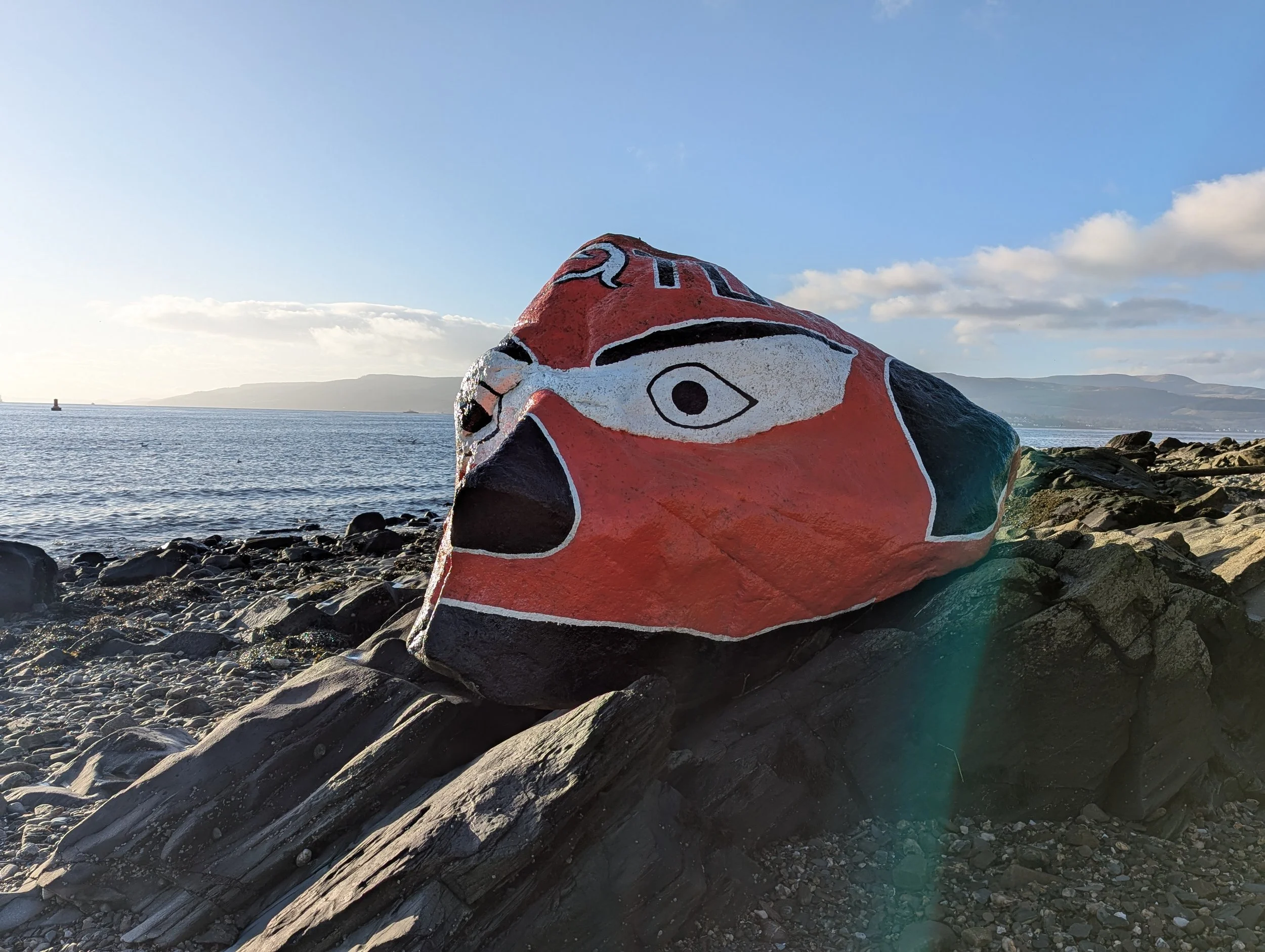
Tut Tut Painted Rock
Care and Maintenance of Tut Tut painted rock
The shoreline of the Rosneath peninsula is littered with erratics which came to rest here as the last glacial ice finally receded. Their geology is a study in its own right but it just so happened that one particular erratic, larger than most, was very prominently deposited on the bedrock of the intertidal zone at the southern extremity of the peninsular. There it remained undisturbed by everyday human interest.
In 1922, archaeological excavations in the Valley of the Kings, Egypt, were undertaken by Lord Carnarvon and Howard Carter and the spectacular discovery of Tutunkhamun’s Tomb was reported in British newspapers causing a wave of public interest. At about this time some unknown local enthusiasts saw a likeness between the shape of our prominent erratic and the Egyptian hieroglyphics depicted in the papers. Under a cloak of secrecy, they painted the rock to match the popularised style. It became affectionately known, as ‘Tut Tut’.
In the one hundred years since that original interest the rock has been treated to a regular face-lift. For many years this was undertaken (without publicity) by the owners of the adjacent house now called Landward but in more recent years other residents have taken over the job. The work is hampered by the shape of the rock and its position on the shoreline, making access difficult. It can be quite arduous and not without risk. Favourable tidal and weather conditions are essential. The leader of the current volunteers recently approached the Heritage Group for support to keep Tut-Tut looking good and up to standard.
There is something of a tradition of rock painting on the shores of the Clyde. Nearby examples include Crocodile Rock at Millport, Jim Crow by the Holy Loch and the two birds at the Kyles of Bute, raised to prominence by Para Handy.
Tut Tut received its most recent paint job this summer but in due course more care and maintenance will be required. The paint and materials are kindly supplied by Ensign Motifs but agile man/woman power will be required to carry out the work. The Heritage Group hopes to organise and supervise future work parties.
Mileage Panels
Care and maintenance of the Peninsula’s mileage panels
These “Pointing Finger” milage panels can be found along the Shore Road and Lochside Road in Kilcreggan & Cove villages. Established in the 1880s, they were originally placed at one - mile intervals from Coulport to Dumbarton. There are other surviving examples elsewhere in Argyll and Bute and West Dunbartonshire.
The panels were recently renovated from a poor condition by the North Clyde Archaeological Society and over the last few years have looked much improved in their original white background and black lettering.
The Heritage Group intends to maintain them in the forthcoming future.